
Saudi Arabia is recalibrating its ambitious Vision 2030 development programme by transferring some major projects to private sector management, according to the kingdom’s economy minister, Faisal al-Ibrahim.
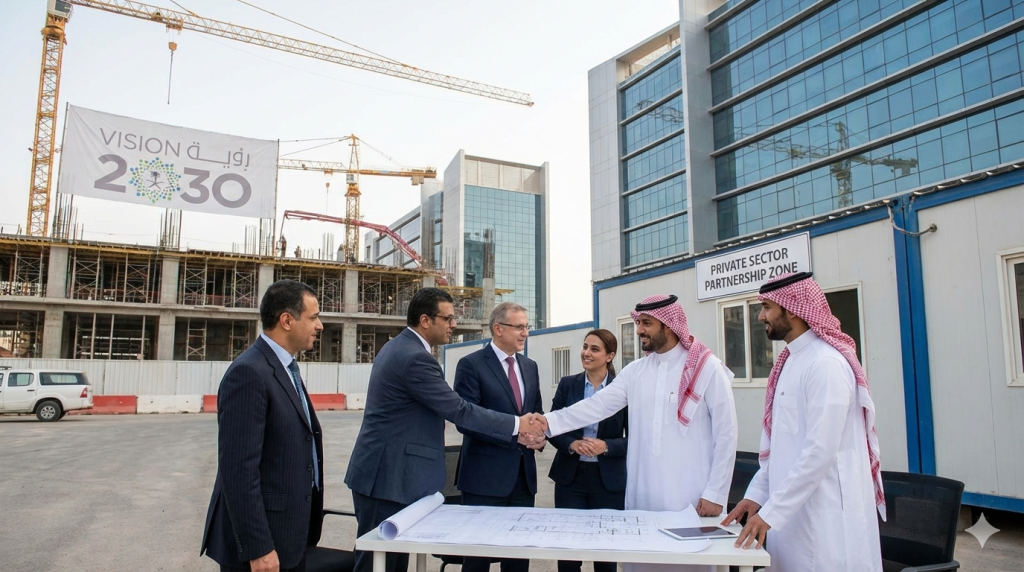
Speaking with Reuters at the World Economic Forum in Davos, Ibrahim explained that the government is taking a flexible approach to managing its extensive development pipeline, adjusting timelines and project scopes to prevent economic overheating while maintaining progress toward its 2030 transformation goals.
“The private sector is ready now and even more eager to participate,” Ibrahim said. “Recently, some entire scopes of projects were given to the private sector to deliver with some regulatory support and guidelines.”
The world’s largest oil exporter is now more than halfway through its Vision 2030 plan, which calls for hundreds of billions of dollars in government spending to diversify the economy beyond oil revenues through investments in tourism, entertainment, and other non-oil sectors.
However, signature projects like Neom, a futuristic desert city on the Red Sea, have experienced delays and restructuring as the kingdom grapples with economic headwinds and logistical challenges.
In October, Reuters reported that Saudi Arabia’s $925 billion sovereign wealth fund is preparing to pivot away from its heavy focus on real estate mega-projects.
Ibrahim emphasized that the adjustments stem from multiple factors, including inflation concerns, import pressures, and the need to avoid overheating the economy. “We don’t want value leakage by creating increased import pressure, and we don’t want to create an inflationary environment,” he explained.
The minister stressed that transparency is key to the process. “We’re not going to shy away from saying we had to shift this project, delay it, re-scope it,” he said, though he declined to name specific projects.
He also clarified that Vision 2030 extends beyond physical infrastructure. “If you think that the project itself, the brick and mortar… is Vision 2030, that could be a challenge.
The project is there to design for an outcome.”
The strategy appears to be delivering results. Saudi Arabia’s non-oil economy now represents over 55% of real GDP, with the proportion of non-oil activities dependent on oil flows dropping from roughly 90% to around 70%. Most non-oil sectors have achieved steady annual growth of 5-10% over the past five years, with both overall and non-oil growth expected to maintain 4-5% over the next three years.
The 2026 budget marks the beginning of a “third phase” of Vision 2030, signalling a shift from launching economic reforms to maximizing their impact. Looking ahead, Saudi Arabia is prioritizing major international events, including the 2027 AFC Asian Cup, the 2030 World Expo, and the 2034 FIFA World Cup.
Regarding World Cup preparations, Ibrahim revealed that organizers are studying Qatar’s 2022 tournament model and consulting with Qatari officials, noting “The Qataris have been very helpful.”
Source: Reuters (https://www.agbi.com/economy/2026/01/saudi-handing-scope-of-some-vision-2030-projects-to-private-sector/)

